3PL Meaning: What Is a 3PL (Third-Party Logistics)?
By: Paula Supangco
What does 3PL mean?
3PL stands for third-party logistics. A 3PL is an outside company that handles a brand’s logistics work, such as receiving inventory, warehousing, picking and packing orders, shipping, and processing returns. Brands use a 3PL so they don’t have to run their own warehouse or shipping operation.
Key takeaways
- The “third party” is the outside logistics company: the business selling the goods is the first party, and the carrier or buyer is the second.
- A 3PL warehouse is run by the 3PL for its client brands, often with several brands’ inventory in one building.
- Core 3PL services are receiving, storage, pick and pack, shipping and returns. Many 3PLs add kitting, freight and wholesale distribution.
- A 3PL is not a carrier or a 4PL: a carrier moves the goods, a 3PL runs the warehouse and the shipping, and a 4PL manages the whole logistics setup.
What Is 3PL?
Third-party logistics (3PL) is the outsourcing of a business’s logistics to a specialist company. The Council of Supply Chain Management Professionals (CSCMP) defines it as “outsourcing all or much of a company’s logistics operations to a specialized company,” a definition the U.S. Bureau of Transportation Statistics cites. For an ecommerce or wholesale brand, that specialized company takes over the physical work between the factory and the customer: storing inventory, running order fulfillment, shipping parcels and freight, and handling returns.
The term names both the service and the business that provides it. A brand that “uses a 3PL” has outsourced that work; a 3PL, or 3PL provider, is the company doing it. The brand keeps the parts that make it a brand, such as product, pricing, marketing and the customer relationship, while the 3PL runs the warehouse and the shipping. 3PLs range from single-warehouse operators focused on a few product categories to national networks with many buildings and their own freight services; which kind fits depends on the brand’s volume, products and customers.
How 3PL Logistics Works
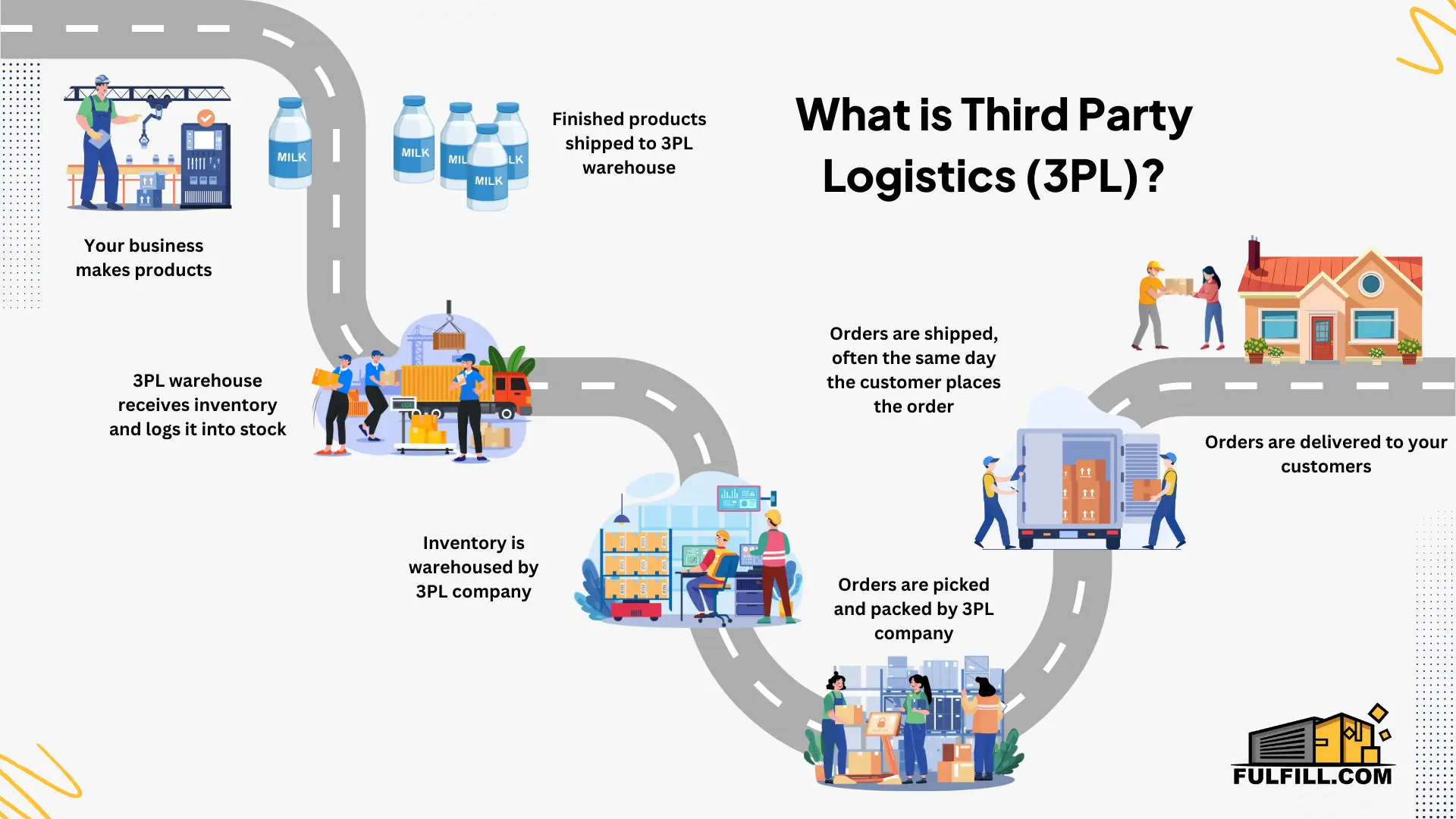
Whatever the brand sells, a 3PL relationship runs on the same loop:
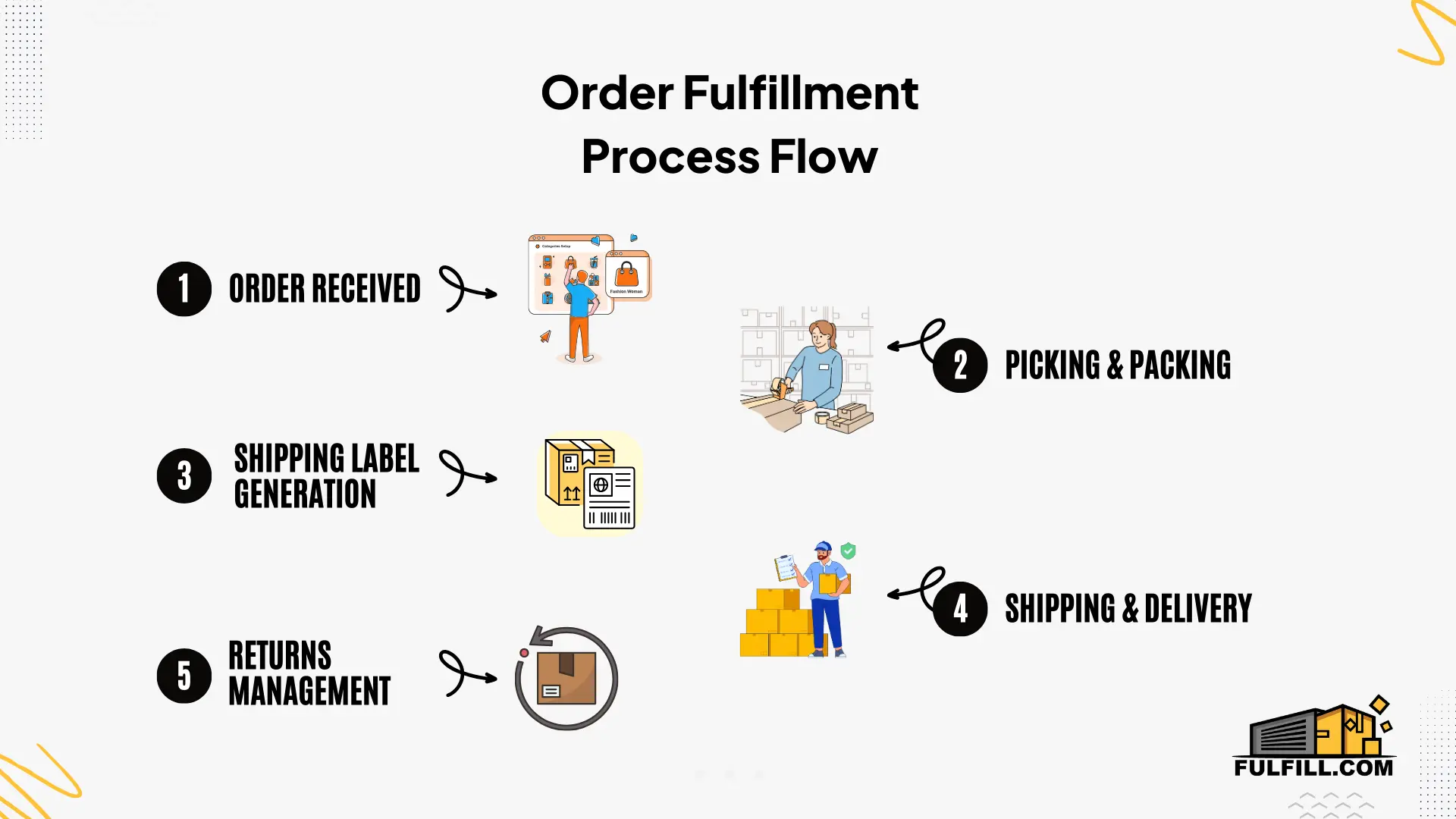
- Receiving: the brand, or its manufacturer, ships inventory to the 3PL. The warehouse counts it, checks it against the expected shipment and logs each item into stock.
- Storage: inventory is put away on shelves, in bins or on pallets, and tracked by location in the 3PL’s warehouse management system.
- Order sync: when a customer buys, the order flows from the store or marketplace to the 3PL through an integration, with no manual entry.
- Picking and packing: staff pick and pack the order, choosing the right box or mailer, adding any inserts and printing the shipping label.
- Shipping: the package leaves with a parcel carrier, or by LTL or truckload freight for wholesale orders, and tracking flows back to the store and the customer.
- Returns: returned items are received, inspected, and restocked or set aside, and the brand gets a record of each one. That reverse flow is returns management.
Here is what that looks like for a skincare brand selling on its own website and on Amazon. It sends pallets from its manufacturer to the 3PL, and the 3PL connects to both sales channels. A website order is picked, packed in the brand’s custom mailer and shipped by parcel; inventory headed for Amazon is labeled to Amazon’s rules and sent on in cases. The brand watches stock, orders and returns in the 3PL’s client portal and never touches a box.
A 3PL does not take over the whole business. The brand still forecasts demand and reorders inventory, decides what to sell where, answers its customers, and sets the rules the 3PL works to: packaging, inserts, carrier choices and how returns are graded. The clearer those rules are at onboarding, the fewer exceptions the warehouse has to escalate.
Key Functions
Inside that loop, a 3PL is doing four jobs at once:
- Logistics management: deciding which warehouse holds which stock, running order management across every sales channel, and working around carrier delays or capacity crunches before customers feel them.
- Transportation: picking the carrier and service for each shipment, from small parcels to LTL and truckload freight, and using freight consolidation so smaller shipments travel at a lower cost per unit. Carriers make the last-mile delivery to the customer’s door; the 3PL hands off each parcel and tracks it.
- Warehouse operations: receiving, putaway, storage, cycle counts and the software that ties them together. Fast-selling items sit closest to the packing stations so pickers walk less; the next section covers the warehouse itself.
- Fulfillment operations: picking, packing, labeling and shipping each order to the brand’s spec, including custom packaging, inserts and gift notes. Orders are released to the floor in batches so each day’s volume makes the right carrier pickup.
What Is a 3PL Warehouse?
A 3PL warehouse is a warehouse that a third-party logistics provider runs on behalf of its client brands. The 3PL supplies the building, the staff, the equipment and the software, and each brand pays for the space and services it uses instead of signing its own lease. Many 3PL warehouses are shared, with several brands’ inventory under one roof, while larger clients can get dedicated space or a dedicated team. Shared space suits most small and midsize brands because they pay only for what they use; dedicated space makes sense for high volume, special handling or strict security requirements.
Sharing a building does not mean sharing inventory. The 3PL keeps each client’s stock under its own account, the brand still owns every unit, and storage and fulfillment are billed client by client. A good 3PL can tell each brand exactly what it holds, down to the bin.
In warehouse terms, a 3PL warehouse is a contract warehouse; our guide to the different types of warehouses explains how it compares with the other kinds. You will also hear “fulfillment center.” A warehouse is built to store goods and a fulfillment center is built to move orders out, so most ecommerce 3PL warehouses work as both.
Three things separate a well-run 3PL warehouse from a room of shelves:
- A warehouse management system: the WMS records where every unit sits, sends pickers to the right bin and checks each scan against the order, which is how one building keeps orders straight for many clients at once.
- Inventory control: receiving checks, cycle counts and lot or expiration tracking keep the count in the system matched to what is on the shelf. Good inventory management also flags low and slow-moving stock before it turns into a stockout or a storage bill.
- Visibility: the brand sees what the warehouse sees (stock on hand by SKU, orders in progress, shipments with tracking, and returns) in a client portal or through the integration with its store.
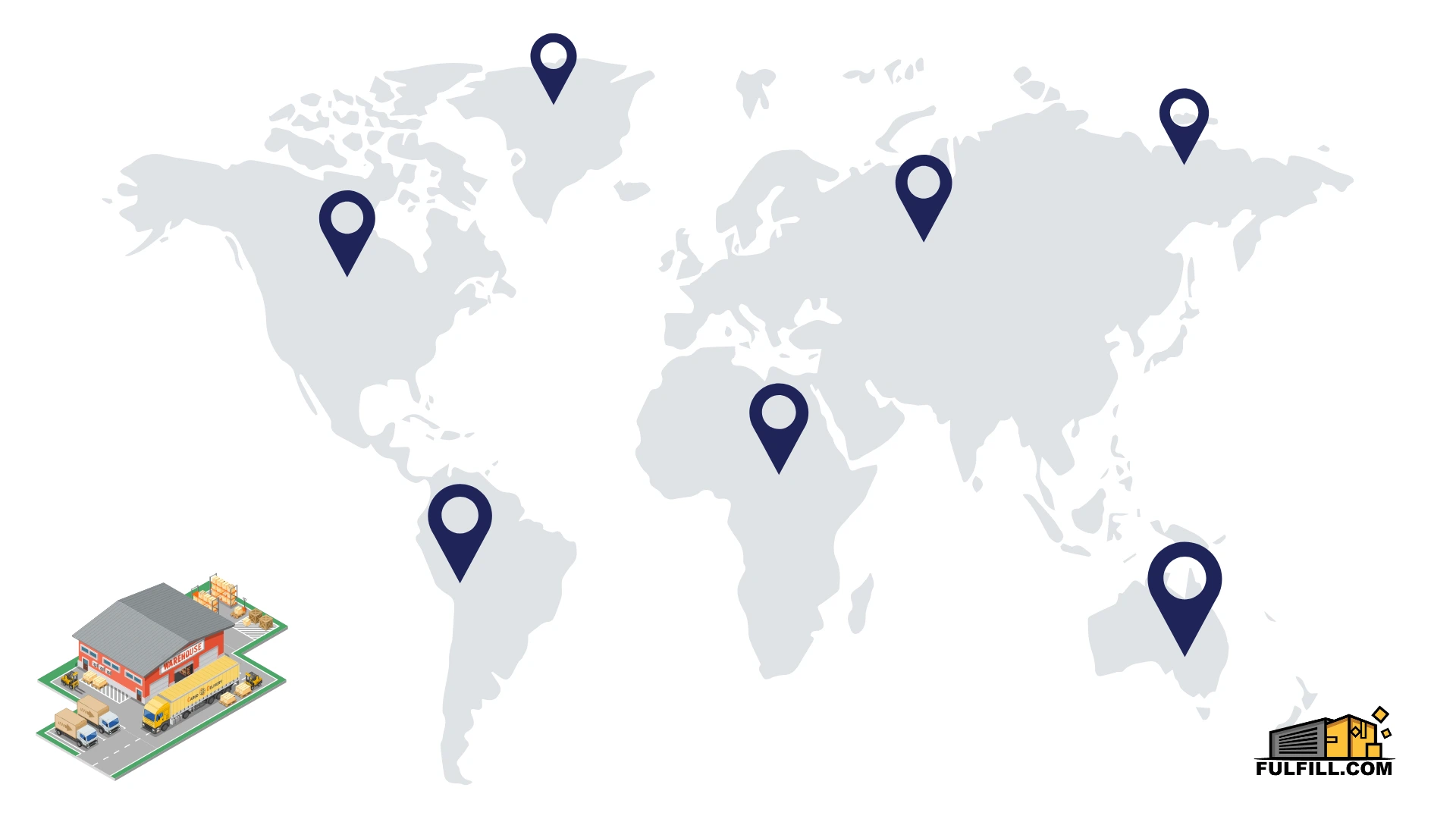
Many 3PLs run more than one warehouse, so a brand can split inventory between regions and ship each order from the building closest to the customer, which shortens transit and can lower shipping cost.
3PL Services: What a 3PL Provider Does
Most 3PL providers sell a core set of services plus a menu of extras. The core covers what nearly every brand needs; the extras are where providers specialize, so they are the first thing to compare when your products or channels are anything but simple.
Core 3PL Services
- Receiving and storage: checking in inbound shipments, from parcels to full containers, and storing inventory on shelves, in bins or on pallets until it sells.
- Pick and pack: picking each order’s items, packing them in the right box or mailer and adding inserts or gift notes. Some providers make it their focus: see pick and pack 3PLs.
- Shipping and carrier management: buying labels at the 3PL’s carrier rates, choosing the service level for each order and booking LTL or truckload freight for bulk shipments. Many 3PLs compare carriers order by order and pick the lowest-cost service that still meets the brand’s delivery promise. LTL carriers price by density, which you can estimate with our freight class by density calculator.
- Returns processing: receiving returned items, inspecting them, and restocking, refurbishing or disposing of each one, then reporting what came back and why. Brands with heavy return volume often look for returns processing 3PLs.
- Ecommerce integration: connecting the warehouse to the brand’s store and marketplaces so orders, inventory and tracking sync automatically. Our ecommerce fulfillment guide covers this model end to end.
Value-Added and Specialized Services
Value-added services are where 3PL providers differ most, so ask which ones a provider runs in its own buildings and which it hands to a partner.
- Kitting and assembly: bundling items into kits, subscription boxes or gift sets before they ship.
- B2B and retail distribution: shipping cases and pallets to wholesale buyers and retailers under their routing and labeling rules, and cross-docking goods straight from inbound to outbound trucks when they don’t need storage.
- Marketplace prep: labeling and packing inventory to a marketplace’s inbound requirements, such as Amazon FBA prep.
- International shipping and customs: cross-border parcels and freight, with the paperwork for customs clearance. Low-value imports into the U.S. now need a customs entry because the de minimis exemption is suspended; our Section 321 guide covers what applies today.
- Special handling: temperature-controlled, hazmat, oversized or high-value goods, which only some warehouses are set up to handle.
- Quality control: inspecting inbound shipments for damage and count errors, and checking orders against the packing slip before they ship.
- Reporting and customer support: inventory, order and return reports for the brand, and at some providers, help with where-is-my-order questions and return authorizations.
Asset-Based vs Non-Asset-Based 3PLs
An asset-based 3PL owns the warehouses, trucks or equipment it uses, which gives it direct control over capacity and quality. A non-asset-based 3PL owns little of that and contracts with other companies’ carriers and warehouses, trading some control for flexibility.
1PL to 5PL: What a 3PL Is Not
The “PL” levels describe how much of its logistics a business hands to someone else. Each step up hands off more of the work, from moving the goods, to running the operation, to managing the providers who run it:
Level | What it means |
|---|---|
1PL (first-party logistics) | The business moves its own goods, from its own warehouse, with its own staff and sometimes its own trucks. |
2PL (second-party logistics) | A carrier: the parcel, trucking, ocean or air company that moves goods from one place to another on its own vehicles. |
3PL (third-party logistics) | An outside company that runs storage, fulfillment, shipping and returns for the business. |
A manager of the whole logistics setup, often coordinating several 3PLs and carriers on the business’s behalf. | |
A provider that plans and runs logistics across networks of providers and clients, usually through technology platforms. |
The pair people mix up most is 3PL vs 4PL: a 3PL runs the operation, while a 4PL manages the operators and may own no warehouse at all. Our 3PL vs 4PL comparison covers when each one fits. Most ecommerce brands work with a 3PL directly; a 4PL usually enters the picture when a business runs several 3PLs, regions or transport modes and wants one party to manage them all.
3PL vs Freight Broker, Freight Forwarder and Dropshipping
- Freight broker: a middleman who matches a shipper’s load with a carrier’s truck and negotiates the rate, without storing or handling the goods.
- Freight forwarder: a company that arranges international shipments, booking space with ocean and air carriers and handling the export and import paperwork. Many 3PLs offer forwarding or work with a forwarder, but a forwarder does not run order fulfillment.
- Dropshipping: a retail model where the seller never holds the stock and the supplier ships each order directly. With a 3PL, the brand owns its inventory and the 3PL stores and ships it.
Why Use a 3PL? Benefits, Downsides and Who Uses One
Brands outsource logistics when running it themselves starts to cost more in time, space or money than it saves. A 3PL is not the right answer for everyone, so weigh both sides.
Benefits of Using a 3PL
- No warehouse to own or lease: the brand pays for the space and labor it uses instead of carrying a lease, equipment and a warehouse team, which turns a large fixed cost into one that moves with order volume.
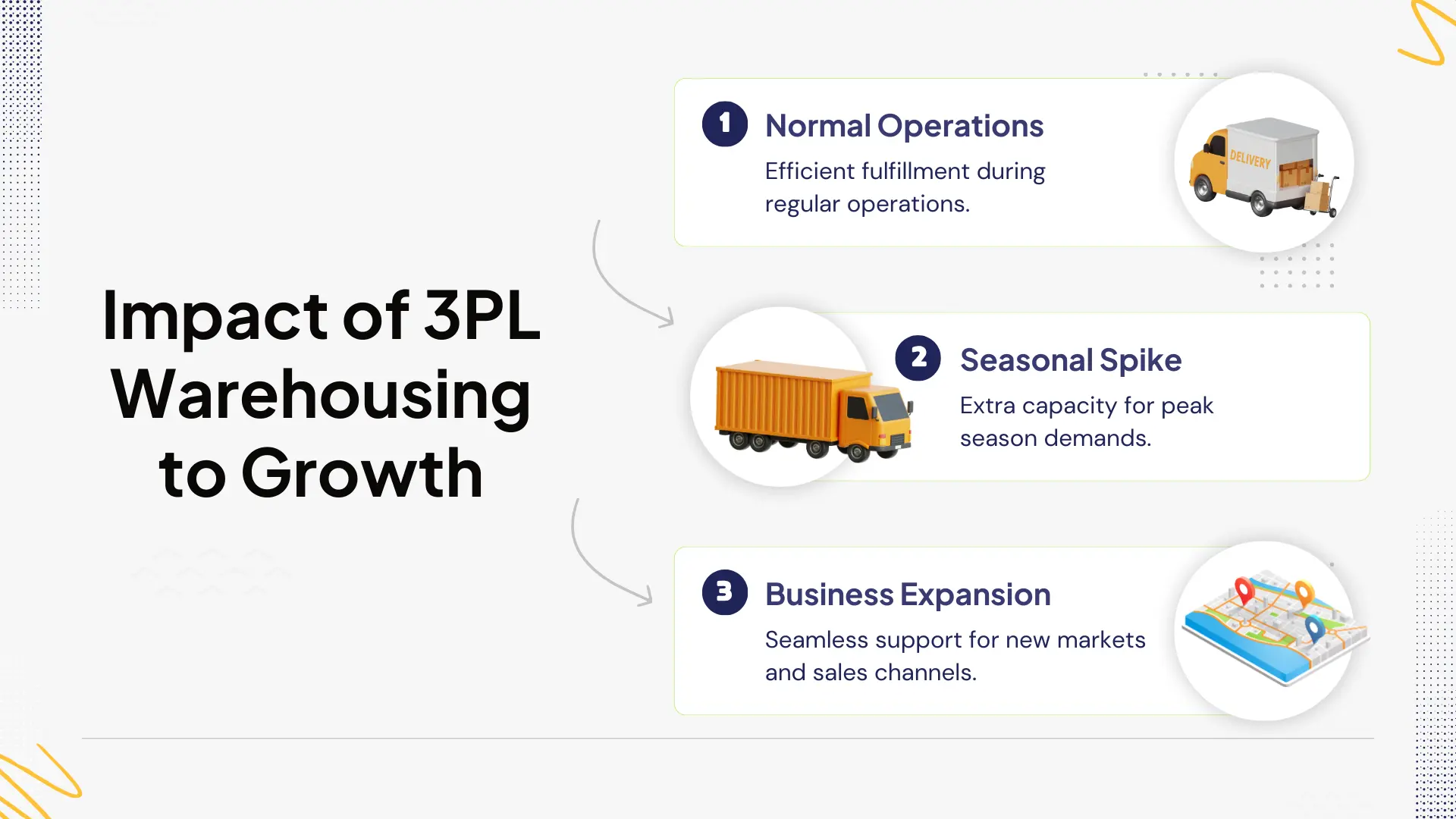
- Room to scale: the 3PL absorbs seasonal peaks and growth with its own space and staff, so the brand doesn’t have to build for its busiest week of the year or pay for idle space when sales slow.
- Shipping rates and expertise: 3PLs ship at volume, so many can offer carrier rates a single brand would not get on its own, and they bring processes refined across many clients.
- Technology already in place: a warehouse management system, barcode scanning, store integrations and carrier connections that would be costly for one brand to build and maintain.
- Reach: a 3PL with several warehouses can place inventory closer to customers and open new regions and sales channels without a new lease.
- Time back: the team spends its hours on product, marketing and customers instead of packing boxes.
Downsides to Weigh
- Less direct control: the brand can’t walk onto the floor to fix a mistake, so it depends on the 3PL’s processes, reporting and communication.
- A more complex bill: fees for receiving, storage, picking, packaging and extras add up, and a brand that hasn’t modeled its own order profile can be surprised by the invoice.
- Switching takes work: onboarding means integrations, inventory transfers and a learning curve, so a poor fit is costly to undo.
Who Uses a 3PL?
3PLs serve ecommerce and direct-to-consumer brands, Amazon and marketplace sellers, wholesale and B2B companies that ship to retailers, subscription businesses, and manufacturers that sell direct. Three common setups:
- A direct-to-consumer apparel brand that has outgrown packing orders in its own space hands storage, pick and pack and returns to a 3PL, and keeps design, marketing and customer service in-house.
- An Amazon seller uses a 3PL to hold bulk inventory, prep and send cases into Amazon’s network, and ship its website orders from the same stock.
- A food or beverage company selling to grocery chains uses a 3PL for pallet storage and retail-compliant shipments, plus parcel fulfillment for its online store.
The usual trigger is growth: packing orders starts to crowd out running the business, or the back room runs out of space. Our guide on how to know when you need to outsource fulfillment walks through the signs.
The alternative is keeping logistics in-house. That gives full control and can suit a brand with very low volume or unusual handling needs, but it means owning the space, staff and systems that a 3PL spreads across many clients.
3PL Pricing at a Glance
Most 3PLs charge for each activity rather than one flat fee: receiving when inventory arrives, storage by the pallet, bin or cubic foot, a pick and pack fee per order, plus shipping and packaging. Some add setup fees, account minimums or charges for extras like kitting, so compare quotes on your own order profile with our 3PL pricing guide.
How to Choose a 3PL
Start with your own numbers: order volume, SKU count, order profile, sales channels and where your customers are. Then judge each provider on:
- Fit: experience with products like yours and the channels you sell on, including any special handling.
- Locations: warehouses near your customers, so orders travel shorter distances.
- Technology: a working integration with your store and marketplaces, and a portal that shows inventory and orders.
- Terms: clear pricing, and contract length and exit terms you can live with.
- Accountability: the KPIs they report, such as order accuracy and on-time shipping, and how often you will review them together.
Our step-by-step guide on how to choose a 3PL provider covers quotes and red flags, and these 7 questions to ask a 3PL help in the interviews.
3PL Frequently Asked Questions
What does 3PL stand for?
3PL stands for third-party logistics. The term covers both the practice of outsourcing warehousing, order fulfillment and shipping to an outside company and the company that does the work, also called a 3PL provider.
What does the “third party” refer to?
The first party is the business selling the goods and the second party is the carrier or buyer. The third party is the outside logistics company hired to store, pack and ship those goods.
What is a 3PL warehouse?
A 3PL warehouse is a warehouse that a 3PL runs for its client brands, often storing and shipping inventory for several brands in one building. The 3PL supplies the space, staff and systems, and each brand pays for the services it uses.
Is a 3PL a fulfillment center?
The terms overlap. A fulfillment center is a facility built to ship orders to customers, and many 3PLs run them, but a 3PL is the company, which may also offer storage, freight and wholesale distribution.
What is the difference between a 3PL and a 4PL?
A 3PL runs logistics operations such as warehousing, fulfillment and shipping. A 4PL manages the whole logistics setup for a business, often coordinating several 3PLs and carriers, and may not run any warehouses itself.
How does 3PL work?
The brand sends inventory to the 3PL, which receives and stores it. When a customer orders, the order flows to the 3PL automatically, and the 3PL picks the items, packs them, ships the package and later handles any return.
Conclusion
A 3PL takes receiving, storage, fulfillment, shipping and returns off a brand’s hands, so the team can spend its time growing the business. When you are ready to compare providers, Fulfill.com helps brands find 3PLs that fit their products, order volume and customer locations.
Find a 3PL