January Returns Season Creates Extended Peak for Warehouses
The holiday shipping rush may be over, but for 3PLs and warehouse operators, the work is far from done. Returns volume has exploded to the point where many in the industry now call January a "second peak"—and the numbers back that up. The National Retail Federation projects returns will hit nearly $850 billion in 2025, keeping warehouses buzzing with activity well into the new year.
"[January is] absolutely a second peak," says Kait Peterson, vice president and head of marketing at Locus Robotics, a developer of autonomous mobile robots (AMRs). "Many people don't know that we handle a lot of putaway and returns with our robots, in addition to picking. When we see an increase in peak season, we see an increase in returns. And we're expecting this year's peak season to set new records for units processed [throughout] our network."
Scaling Up for Returns Processing
Technology providers are responding to this extended peak with flexible solutions. Locus Robotics deployed 3,000 peak-season robots to customers as of late November under its robots-as-a-service (RaaS) model. Those robots typically stay through the end of January specifically to handle returns-related activity, according to Peterson.
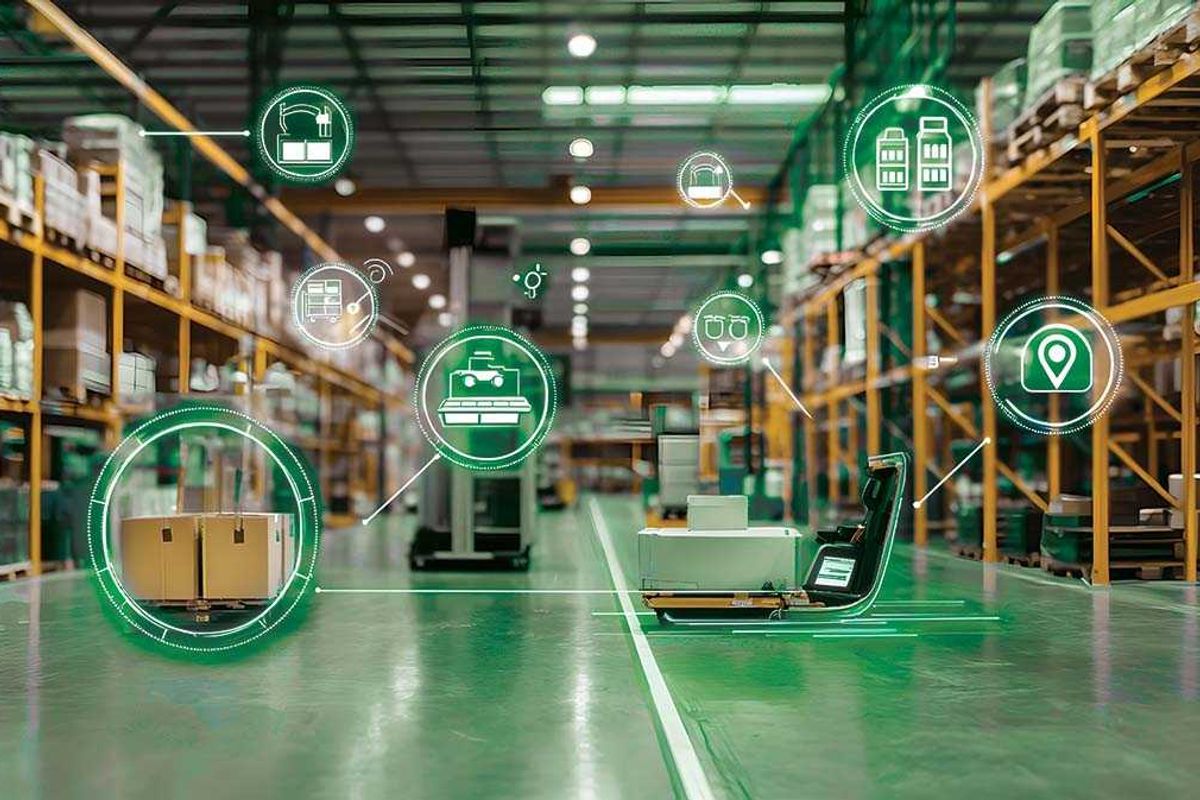
The company's collaborative AMRs guide workers to their next closest pick, speeding the process and minimizing walk time. Once items are loaded onto the robot, it carries the load for the worker—eliminating the need to push heavy carts through the warehouse. But increasingly, these same robots are being deployed for putaway operations during the returns surge.
"When you implement LocusBots robots, you also have a putaway [function]," Peterson explains. The robots use the same interface for putaway as they do for picking, allowing operators to program the AMRs to move individual items, containers, or cases from receiving to storage.
What This Means for 3PL Operators
The rise of the "second peak" presents both challenges and opportunities for fulfillment providers. On one hand, it extends the period of maximum operational stress and labor requirements. On the other, it creates opportunities for 3PLs that can efficiently handle returns processing—a service that's becoming increasingly valuable to retail clients dealing with growing e-commerce return rates.
The RaaS model offers particular advantages during this period, allowing warehouses to scale capacity up and down without capital investment. As returns continue to grow as a percentage of total e-commerce volume, having flexible automation solutions for this extended peak period is becoming less of a nice-to-have and more of an operational necessity.