
Kenco Group vs Torque
3PL Comparison Guide
Last updated: March 2026
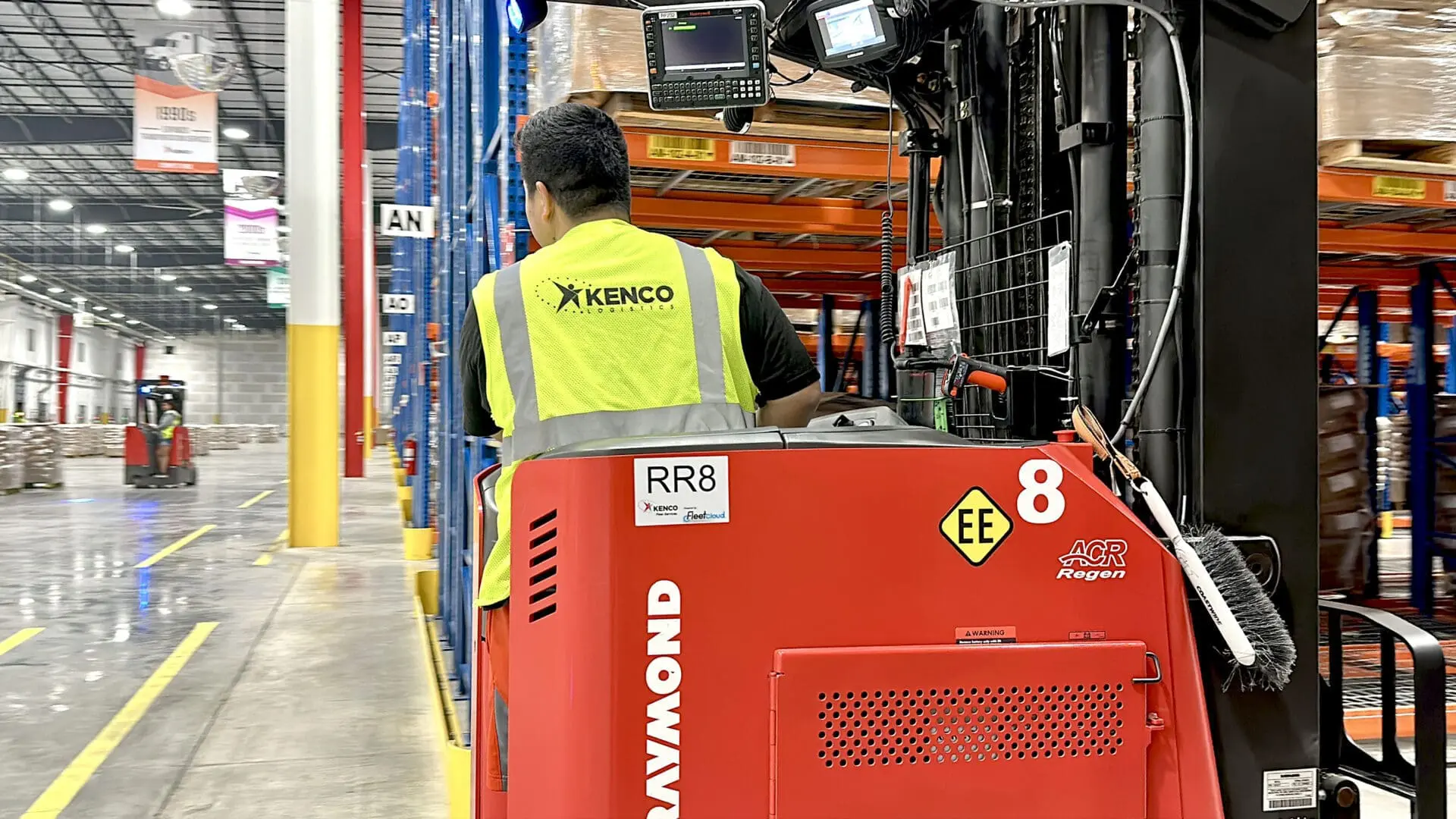
Scroll down for detailed side-by-side comparison
Company Overview
Key information comparing Kenco Group and Torque side by side

Warehouses
Kenco Group
90
Torque
9
Year Founded
Kenco Group
1950
Torque
1991
Company Type
Kenco Group
Enterprise
Torque
Mid-Market
Capacity
Kenco Group
40,000,000
Torque
Not available
About Kenco Group
Kenco Group is a third-party logistics provider specializing in services such as distribution, eCommerce fulfillment, transportation management, material handling equipment services, and data-driven supply chain solutions. With over 75 years of experience, Kenco focuses on delivering agile logistics solutions tailored for operational excellence. The company remains committed to addressing evolving supply chain challenges with innovative and efficient approaches.
About Torque
Torque 3PL is a third-party logistics provider specializing in a wide range of services designed to support businesses across industries. Their offerings include freight management, warehousing, ecommerce fulfillment, and specialized pre-retail processing. With capabilities in gift wrapping, customized dispatch notes, and state-of-the-art warehouse technology, Torque ensures seamless operations for clients. By integrating platforms for suppliers and handling returns management efficiently, Torque emphasizes precision and adaptability in their processes. Their focus on comprehensive logistics solutions positions them as a reliable partner for evolving business needs.
What Our VP Says

Greg Airel
VP of Sales & Partnerships, Fulfill.com
Former 3PL Owner
"As someone who's run a 3PL and now helps hundreds of brands find the right logistics partner, here's my honest take on this comparison..."
Kenco Group
- Kenco Group is best suited for high-volume ecommerce businesses shipping 5,000+ orders monthly that require nationwide distribution coverage and complex supply chain coordination
- The 90-warehouse network with 40 million square feet makes them ideal for businesses needing multi-region inventory positioning to optimize delivery speeds across the United States
- Companies requiring integrated transportation management alongside warehousing—such as those managing both B2B distribution and D2C fulfillment—will benefit from Kenco's comprehensive approach
- The 75+ years of experience particularly benefits businesses in regulated industries or those with complex material handling requirements
Torque
- Torque 3PL is optimal for mid-sized ecommerce brands shipping 1,000-5,000 orders monthly that prioritize customer experience differentiation and require specialized pre-retail services
- Businesses selling gift items, subscription boxes, or products requiring customized packaging will particularly value the gift wrapping and personalized dispatch note capabilities
- The emphasis on returns management efficiency makes Torque suitable for fashion, apparel, and home goods brands with higher return rates needing streamlined reverse logistics
- Companies operating with multiple suppliers who need platform integrations for coordinated inventory management will benefit from Torque's supplier connectivity focus
Frequently Asked Questions
Common questions about Kenco Group vs Torque
Kenco Group's 90 warehouses with 40 million square feet of capacity provide significantly more geographic distribution points, potentially enabling 1-2 day ground shipping to most US customers through strategic inventory positioning. Torque's 9 warehouse locations require understanding their specific geographic placement—if these locations align with your primary customer concentrations, they may provide adequate coverage at lower cost. Request zone mapping from both providers showing what percentage of your customers fall within 1-day, 2-day, and 3-day ground shipping zones to make an accurate comparison based on your actual customer distribution.
Businesses selling premium products, subscription boxes, corporate gifting solutions, or special occasion items gain competitive advantage from Torque's gift wrapping and personalized dispatch notes. These services are particularly valuable for brands where unboxing experience drives social media engagement and repeat purchases. Direct-to-consumer brands with higher average order values (typically $50+) can justify the additional per-order cost of these customizations. If your business model doesn't emphasize gift purchases or premium presentation, these specialized services may not warrant choosing Torque over providers with broader geographic coverage.
Kenco's founding in 1950 versus Torque's 1991 start represents different value propositions rather than simple superiority. Kenco's longevity suggests established processes, financial stability, and experience navigating economic cycles—important for risk-averse businesses or those in traditional industries. Torque's formation during the rise of modern retail technology means their operations were built with contemporary ecommerce needs in mind rather than adapted from legacy distribution models. For innovative ecommerce brands prioritizing agility and specialized services, Torque's more recent foundation may actually align better with current market demands. Evaluate based on relevant industry experience rather than age alone.
Returns management efficiency becomes critical for businesses with return rates above 15-20%, particularly in apparel, footwear, home goods, and consumer electronics categories. Torque's explicit emphasis on returns management suggests dedicated processes for inspection, restocking decisions, and potentially refurbishment—capabilities that can significantly impact your net profitability on returned items. If your return rate is below 10% or your products are primarily consumable with low return incidence, this specialization provides less competitive advantage. Calculate your annual returns volume and cost per return to determine whether specialized returns handling justifies potentially higher per-order fulfillment costs or reduced geographic coverage.
Request specific warehouse addresses from both Kenco and Torque, then analyze coverage relative to your customer concentration using zone mapping tools. Ask about inventory allocation strategies—whether they recommend distributing inventory across multiple facilities or centralizing based on your order volume. Inquire about minimum inventory requirements per warehouse location, as Kenco's 90 facilities might require higher total inventory investment to leverage geographic advantages. Confirm which locations can accommodate your specific product types (temperature-controlled, hazardous materials, oversized items) and understand transfer costs between facilities if rebalancing becomes necessary.
Enterprise providers like Kenco typically implement monthly minimums ranging from $2,500-$10,000+ to justify account management overhead, while mid-market providers like Torque may offer minimums between $1,000-$5,000. Request detailed pricing including receiving fees, storage (per pallet or cubic foot), pick-and-pack charges, specialized services (gift wrapping, kitting), and technology fees. Ask for total projected monthly costs based on your actual volume projections at multiple tiers (current volume, 50% growth, 100% growth) to understand scaling economics. Both providers should offer volume discounts, but the thresholds will differ significantly based on their operational scale and cost structures.
Kenco's material handling equipment services suggest capabilities in specialized storage solutions, automated picking systems, and potentially custom fixturing for unique product types. This matters most for businesses with oversized items, heavy products requiring specific equipment, or those needing automated systems for high-volume repetitive tasks. If you're shipping standard parcel-sized products under 50 pounds, this capability provides minimal advantage. Companies with complex kitting requirements, products requiring assembly, or those transitioning from B2B palletized distribution to ecommerce piece-picking will benefit from Kenco's equipment expertise to optimize handling efficiency and reduce per-unit labor costs.
Torque's supplier platform integration capabilities suggest they can coordinate directly with your manufacturers or wholesalers for drop-shipping arrangements, consolidated receiving from multiple suppliers, or vendor-managed inventory programs. This is particularly valuable for businesses using multiple suppliers for different product lines, those running marketplace models where supplier ships to Torque for quality control before final fulfillment, or companies managing both their own inventory and third-party vendor products. If you manufacture your own products or work with a single primary supplier, this integration capability provides less operational benefit. Ask Torque specifically which supplier platforms they've integrated previously and whether they can accommodate your suppliers' systems.

Finding a 3PL Shouldn't Feel Like Guesswork
We take the frustration out of fulfillment partner selection with intelligent, data-backed matching, verified reviews, expert guidance, and personalized 3PL recommendations from 2200+ vetted providers.
in logistics volume processed annually
fulfillment matches made, and counting
a perfect match is made on our platform